Rural communities, often characterized by their dependence on natural resources, play a crucial role in sustaining livelihoods and meeting basic needs. The intricate relationship between these communities and their environment underscores the necessity for responsible resource management. The challenges they face, including rapid degradation and depletion of essential resources like land and water, demand urgent attention and sustainable solutions. By implementing responsible land and water management strategies, promoting alternative livelihoods, and fostering community engagement, we can pave the way for resilient rural economies.
LHWRF places a strong emphasis on capacity building, offering training and workshops to FPO members and leaders to enhance their organizational management skills and decision-making abilities. LHWRF also facilitates resource mobilization, ensuring that FPOs have access to credit, technology, and necessary infrastructure. This support is instrumental in improving agricultural practices and overall productivity. Additionally, LHWRF assists FPOs in establishing and strengthening market linkages, helping them secure better prices for their agricultural products and reach a broader consumer base.
LHWRF through its initiative helps in establishing and strengthening of Self Help Groups (SHGs) wherein women members are organized into small groups. These SHGs establish institutional linkages with banks and government departments. To provide a broader platform beyond the village level, the SHGs are further organized into federations, enabling women to operate and grow on a larger scale.
of land under watershed development activities.
group wells
constructed
of Plantation
water recharge
potential created
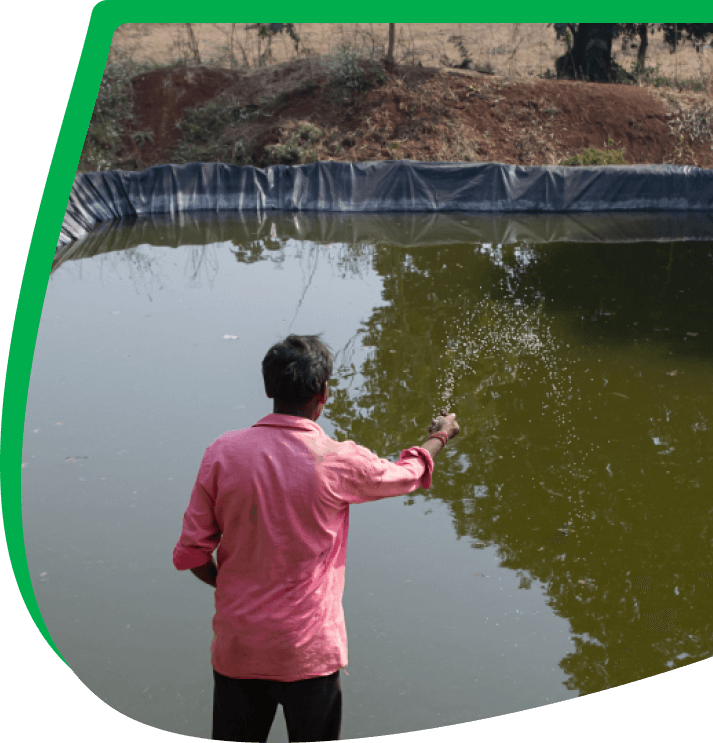
In the quaint village of Fazalpur in Vidisha district of Madhya Pradesh, lives Ram Babu Kushwah, who owns a modest 2 bhiga (1.25 acres) of land. Ram Babu’s life took a positive turn when he availed LHWRF’s support to build a farm pond, measuring 30ft x 50ft and 10ft deep.
This farm pond, a lifeline for his family of six, not only aids irrigation but also became a source of additional income. Ram Babu diversified his earnings by selling ground maize, rice, and even earned Rs. 1 lakh from selling fish harvested from his own pond. The presence of the farm pond also facilitated the sale of goats, with one fetching Rs. 21,000.
With a boost in income by Rs. 80,000 annually, Ram Babu’s success is a testament to the multifaceted benefits of these interventions. The farm pond not only transforms the economic landscape but also serves as a recreational haven and potential hub for vegetation, fostering a brighter future for the entire community.