
Skill deficiency is a major hurdle in realizing the potential of the country. Skill training enables a quantum jump in incomes for individuals too. In rural India, there is a need to shift the population engaged in farming to non-farm or farm-allied trades, where they can get meaningful and gainful employment. The youth are progressively seeking diverse opportunities beyond farming, reflecting a shift in interests. This creates a compelling case for fostering the development of alternative and supplementary livelihood options through diversification.
The focus of LHWRF is to provide skill training and credit support for livelihood security among vulnerable sections. Through strategically located Multi Skill Training Centres, the program provides diverse training to empower individuals, particularly youth and women, for opportunities in wage employment or self-employment. Aligned with NSDC guidelines, the program aims to create livelihoods within villages or nearby townships, covering farm, off-farm, and non-farm sectors. The Skill training is always followed by placement assistance and handholding and mentorship for setting up self-enterprises. This microenterprise development for income generation is achieved through building Credit and market linkages. It is a kind of rural start-up movement brewing in the LHWRF project area through this program.
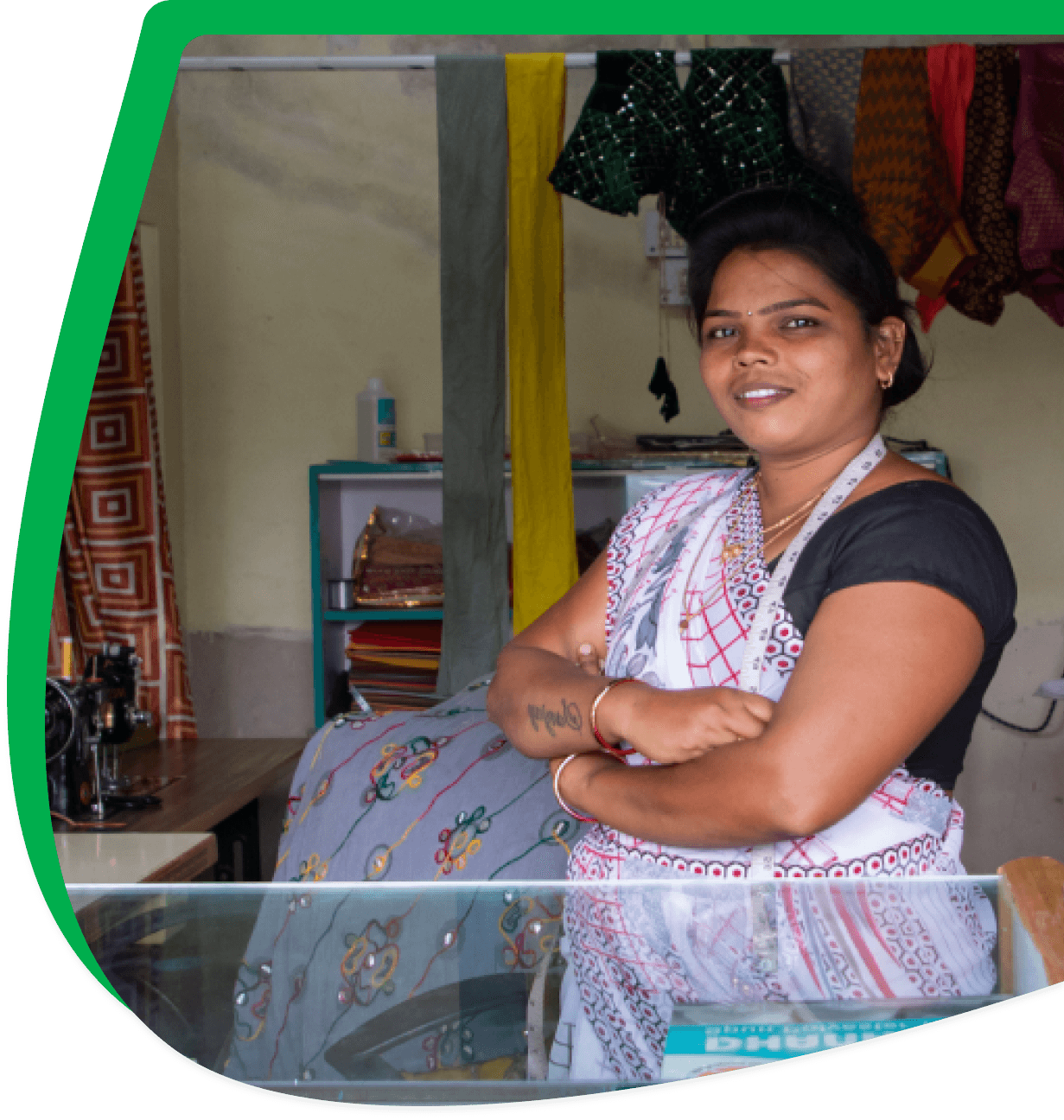
Dhanushree Khanekar, hailing from Mulshi village in Maharashtra, initially earned Rs. 7k-8k monthly through tailoring. Facing initial challenges in sewing speed, she reached out to LHWRF to take up the tailoring course. Dhanushree underwent a transformative 3-month advanced tailoring course sponsored by LHWRF with the support of Atlas Copco (India) Private Ltd., resulting in a significant improvement in speed.
Armed with newfound skills, Dhanushree acquired three sewing machines worth Rs. 40,000 with the support received, doubling her monthly income to Rs. 15k-16k within 7 months. Managing her household of five, including three children, she efficiently balanced tailoring and part-time work as a beautician.
Now, with increased efficiency, she manages the business independently and is able to save 25% of the monthly income.